AI for Students: Top Tools and Tips to Succeed in School(2026 Guide)
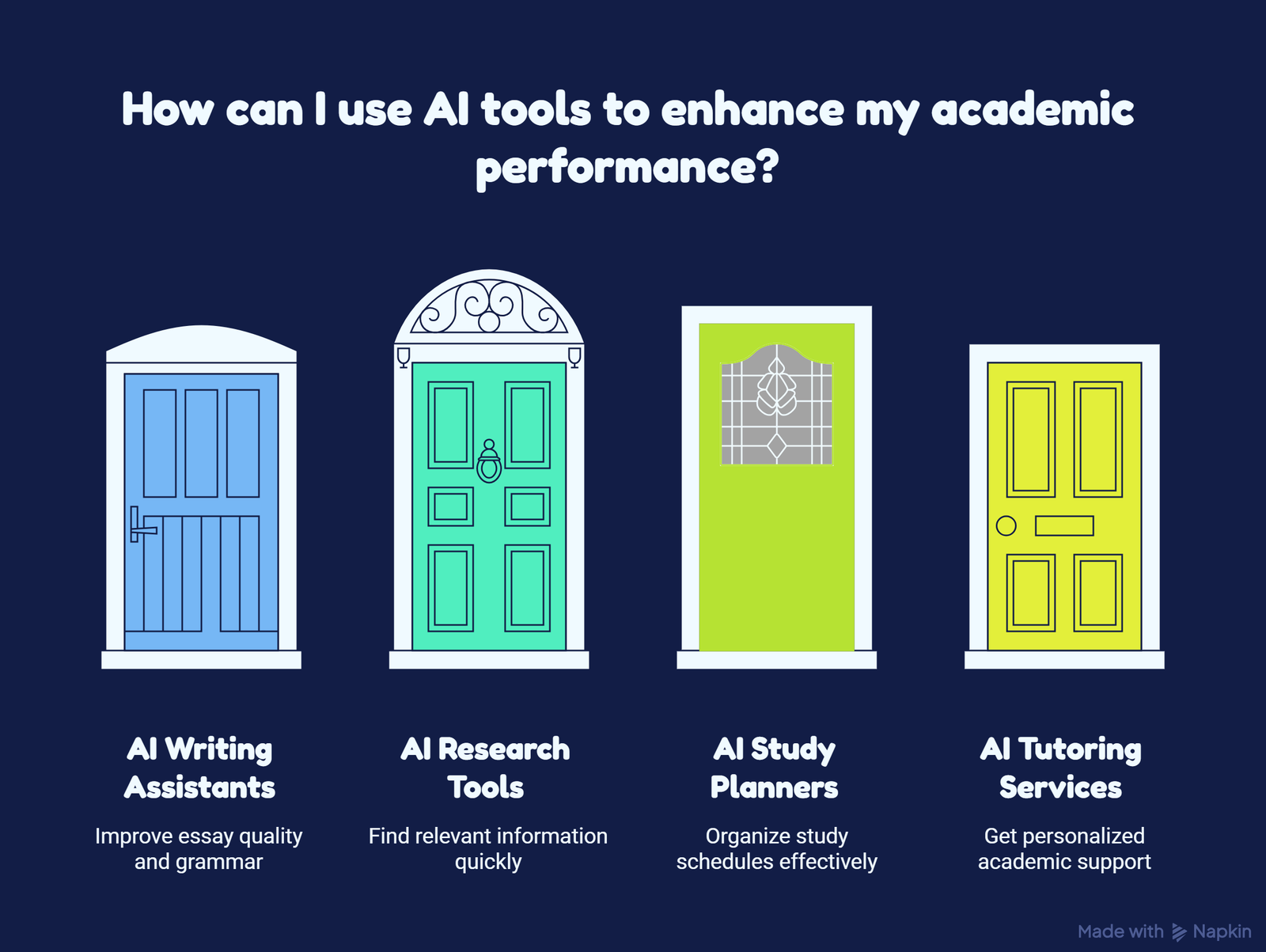
Education has undergone significant changes in recent years. Students are expected to manage assignments, complete research, prepare presentations, revise for exams, and balance extracurricular activities, all while working within limited time constraints. Modern learning tools now help students work smarter by simplifying research, organizing notes, creating practice questions, and improving writing.
This guide explores the best tools for students in 2026, practical study strategies, common mistakes to avoid, and ready-to-use prompts that can improve academic performance.
Top 10 Tools for Students in 2026
| Tool | Best For | Free Version |
| ChatGPThttps://chatgpt.com/ | Homework help, explanations, brainstorming | Yes |
| Google Geminihttps://gemini.google.com/app | Research and Google Workspace integration | Yes |
| Claudehttps://claude.ai/login | Writing, summaries, and long documents | Yes |
| Perplexityhttps://www.perplexity.ai/ | Research with source citations | Yes |
| Notebook LMhttps://notebook.google.com/notebook/ | Organizing notes and study materials | Yes |
| Grammarlyhttps://app.grammarly.com/ | Grammar and writing improvement | Yes |
| Quizlethttps://quizlet.com/ | Flashcards and memorization | Yes |
| Canvahttps://www.canva.com/ | Presentations and classroom projects | Yes |
| Notion | Study planning and note organization | Yes |
| Wolfram Alpha | Mathematics and science problem solving | Limited Free |
Each tool has its own strengths. Students often achieve the best results by combining several tools rather than depending on only one.
A Simple Study Workflow That Works
Following a structured process can make studying more efficient.
Step 1: Organize Your Materials
Gather your class notes, textbooks, lecture slides, and assignment instructions in one place.
Step 2: Understand the Topic
Ask for simple explanations before attempting difficult questions. Breaking complex ideas into smaller parts makes learning easier.
Step 3: Summarize Your Notes
Create concise summaries using bullet points. Short notes are much easier to review before exams.
Step 4: Create Practice Questions
Generate multiple-choice questions, true or false exercises, and short-answer quizzes based on your notes.
Step 5: Review Weak Areas
Identify the topics where you make the most mistakes and spend extra time practicing them.
Step 6: Revise Before Exams
Use summaries, flashcards, and self-testing rather than rereading the entire textbook.
25 Useful Study Prompts
Students can save time by asking clear questions. Here are examples:
- Explain this topic in simple language.
- Summarize this chapter in bullet points.
- Create ten quiz questions from these notes.
- Test my understanding with multiple-choice questions.
- Explain this concept using real-life examples.
- Compare these two theories.
- Help me remember this information with mnemonics.
- Create flashcards from these notes.
- Identify the most important exam topics.
- Explain this diagram step by step.
- Rewrite these notes clearly.
- Improve this essay.
- Check my grammar.
- Suggest stronger vocabulary.
- Create a one-week study plan.
- Help me prepare for tomorrow’s test.
- Explain this math problem step by step.
- Give me practice questions.
- Act as my tutor.
- Ask me questions until I master the topic.
- Simplify difficult terminology.
- Provide examples related to everyday life.
- Suggest reliable research sources.
- Review my assignment.
- Identify mistakes in my answers.
Clear prompts produce better responses and make studying more effective.
Common Mistakes Students Should Avoid
Although these tools are helpful, relying on them too much can limit learning.
Avoid these mistakes:
- Copying answers without understanding them
- Submitting generated assignments without editing
- Ignoring teacher instructions
- Depending entirely on summaries instead of reading important chapters
- Using unreliable information without checking sources
- Waiting until the last minute to study
The best students use technology to support learning, not replace it.
Responsible and Ethical Use
Responsible use is essential for academic success.
Students should:
- Verify important facts using textbooks and trusted sources.
- Follow school or university policies.
- Cite sources whenever required.
- Protect personal information.
- Use technology for learning rather than cheating.
- Develop critical thinking alongside digital tools.
Ethical use builds trust and helps students gain genuine knowledge.
Research-Backed Benefits
Educational research suggests that technology-assisted learning can improve student engagement, provide faster feedback, and support personalized learning experiences when combined with active study habits. Students who regularly practice retrieval, review mistakes, and organize their learning tend to achieve better academic outcomes than those who rely only on passive reading.
Technology is most effective when it encourages understanding, reflection, and consistent practice.
Frequently Asked Questions
Which tool is best for students?
The best choice depends on your needs. ChatGPT,https://chatgpt.com/ is excellent for explanations, Perplexity is useful for research, Grammarly improves writing, and Quizlet helps with memorization.
Can these tools improve grades?
They can support better learning habits, but success still depends on consistent study, practice, and understanding.
Are free versions enough?
Yes. Most students can complete everyday tasks using free plans, although premium versions may offer additional features.
Should students trust every answer?
No. Always verify important information with textbooks, teachers, or reliable academic sources.
Can these tools help with exam preparation?
Yes. They can create summaries, quizzes, flashcards, and study plans that make revision more efficient.
Final Thoughts
Modern learning tools have transformed the way students study, organize information, and prepare for exams. When used responsibly, they can improve productivity, simplify difficult concepts, and help students build stronger study habits.
The key is to use these tools as learning partners rather than shortcuts. Combine them with active reading, regular practice, and guidance from teachers to achieve the best academic results.
Start with one or two tools, develop a consistent study routine, and gradually build a workflow that matches your learning style. Small improvements practiced every day often lead to significant success over time.