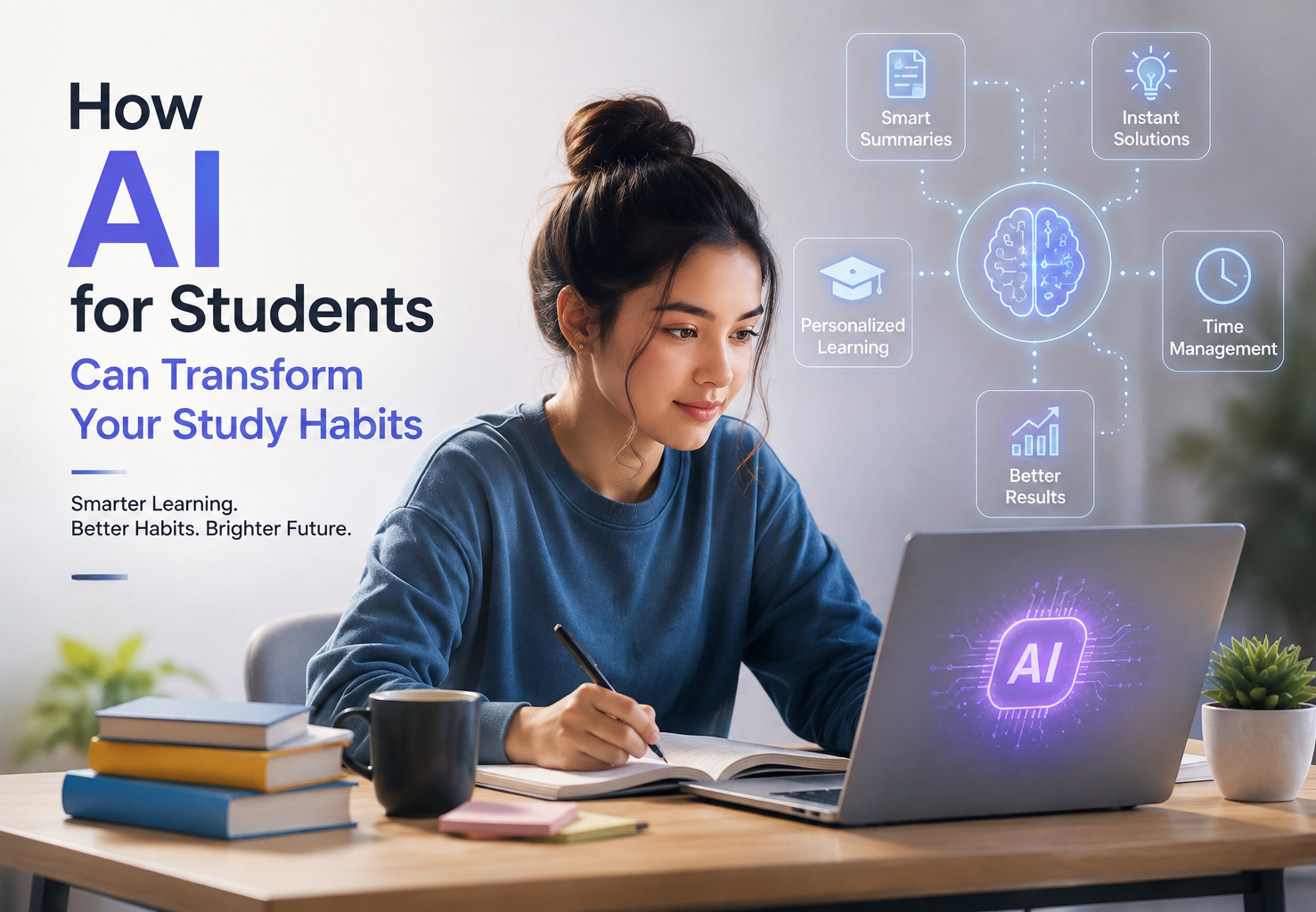

How AI for students Can Transform Your Study Habits
Do you ever feel like you spend endless hours staring at textbooks without actually absorbing the material? I used to struggle with the same cycle of passive reading and mental exhaustion. Everything changed when I started using modern digital tools to reshape my academic routine.
By integrating AI for students into my daily workflow, I shifted from long, draining sessions to short, high-impact bursts of learning. This transition allowed me to move away from inefficient habits toward a more dynamic approach. I now find that I can process complex topics much faster while retaining significantly more information throughout the semester.
Mastering these technologies has been the single most effective way to streamline my education. In this guide, I will share how you can leverage these resources to boost your grades and reclaim your free time. Let’s explore how to turn your study sessions into a highly productive experience.
The Shift to AI-Driven Learning
I’ve learned that working smarter is better than working harder. For years, I thought studying for long hours was the only way to succeed. But now, I see that efficiency is more valuable than just spending a lot of time studying.
Moving from Passive Hours to Active Sessions
Switching to active learning has changed my study routine. I no longer just read notes over and over. Instead, I practice what I’ve learned, which keeps me from getting too tired.
Using AI for students helps me study smarter, not harder. I don’t have to stare at screens for hours. I focus on tasks that really challenge my brain.
The Role of Artificial Intelligence in Education
Artificial intelligence in education gives me a personalized study plan. It uses machine learning for students to find out where I need help. This way, I don’t waste time on things I already know.
Here’s how my studying has changed with these tools:
| Feature | Traditional Study | AI-Driven Study |
| Primary Focus | Time spent | Knowledge gaps |
| Learning Style | Passive reading | Active recall |
| Feedback Loop | Delayed grading | Instant analysis |
| Efficiency | Low | High |
These modern tools help me stay on track without getting too tired. Artificial intelligence in education is like having a personal coach. It helps me reach my goals without burning out.
How to Use AI for Students to Master Your Workflow
Using smart software changed my study game. It turned messy notes into clear learning paths. Now, I focus on deep learning, not just organizing.
Step 1: Deploying Personalized Tutors for Complex Topics
When I hit a tough spot, my AI acts as a 24/7 personal tutor. It breaks down hard topics until I get it.
This student-friendly artificial intelligence is always ready to help. It offers different views on a topic. This way, I really get the material, not just memorize it.
Step 2: Automating Active Recall with Flashcards
Active recall is key for remembering stuff. But making flashcards by hand takes too long. Now, tools scan my notes and make flashcards and quizzes for me. This saves me a lot of time each week.
Step 3: Managing Time and Projects with Smart Tools
Big projects can feel too much. I use smart tools to stay on track. They help me organize my semester by focusing on what needs to be done first.
Breaking Down Large Assignments into Daily Goals
I put my big projects into my app. It breaks them down into manageable daily goals. This stops me from putting things off and keeps me moving all week.
Scheduling Intelligent Study Breaks
AI timers suggest when to take breaks based on how focused I am. This keeps me from getting too tired. By enhancing student learning with AI, I stay energized during long study sessions.
| Tool Category | Primary Benefit | Best For |
| Tutoring Bots | Concept Clarification | Complex Theory |
| Flashcard Generators | Active Recall | Memorization |
| Project Planners | Task Breakdown | Large Assignments |
| Focus Timers | Mental Recovery | Long Sessions |
Essential AI Study Habits for Better Retention
To excel, I follow specific habits that keep my critical thinking sharp. By using AI applications in student education, I’ve changed how I handle complex info. These habits let me control my learning and use tech as a tool.
Drafting Initial Notes Before Seeking AI Feedback
I never start by asking AI to write for me. First, I draft my own notes or arguments. This way, I engage deeply with the material before getting outside help.
After I have a good base, I use AI to check my work. This makes sure AI helps, not replaces, my thinking.
Identifying Knowledge Gaps by Asking for Weak Spots
Asking AI to find flaws in my arguments is key. I ask it to point out any errors or missing facts.
This strategy, using leveraging AI for student success, helps me see where I’m weak. It turns a simple check into a detailed review, making my arguments stronger.
Leveraging Adaptive Apps like Quizlet for Spaced Repetition
Keeping information in long-term memory needs regular practice. I use student-centered ai technology, like Quizlet, for spaced repetition.
These apps track my weak spots and adjust my practice schedule. Automating this cycle lets me focus on what needs most work, making my studying more effective.
Conclusion
My academic journey changed when I started using smarter tools. Personalized learning with ai helped me manage my time better. It also helped me understand complex subjects more deeply.
Small changes can make a big difference over time. Start by trying one new habit in your next study session. Seeing your efficiency improve will motivate you to keep getting better.
Using personalized learning with AI makes studying less stressful. It turns hard nights into moments of success. You’ll have more time to focus on what’s important for your career.
What’s the first step you’ll take today to improve your study routine? Share your progress or ask a question. I’m excited to hear how these strategies help you.
FAQ
How can I use AI for students to change my daily study routine?
I’ve found that using AI for students changes how I study. Instead of just reading, I now engage more actively. I use tools to summarize key points and create practice questions.
This shift helps me focus more on understanding and applying what I learn. It has greatly improved my academic performance.
In what ways is artificial intelligence in education better than traditional study methods?
Traditional methods often don’t fit everyone’s needs. But, artificial intelligence in education lets me tailor my learning. It helps me identify where I need to improve .By using AI, I switch from long study sessions to short, focused ones. This way, I retain more information in less time.
Can machine learning for students help me identify my academic weaknesses?
Yes, machine learning for students is very helpful. I use platforms that track my performance on practice tests. They show me where I need to improve. This way, I can focus my study sessions on the most important areas. It makes my studying more efficient and effective.
Which AI tools for students are best for managing complex assignments?
I rely on ChatGPT for brainstorming and Quizlet for active recall. For big projects, AI tools help me break them down into smaller goals .This approach prevents me from feeling overwhelmed. It helps me stay on track throughout the semester.
Is there such a thing as student-friendly artificial intelligence that acts as a tutor?
Yes, I use student-friendly AI as a 24/7 tutor. When I struggle with a concept, I ask the AI to explain it in simpler terms. This immediate feedback means I don’t have to wait for office hours to get help.
How does enhancing student learning with AI impact long-term memory?
Using AI to enhance learning helps with spaced repetition. I turn my notes into interactive flashcards instantly. These apps schedule reviews based on how well I know a topic. This helps move information from short-term to long-term memory more effectively.
What are the most effective AI applications in student education for time management?
The best AI tools for time management help with scheduling. I use them to plan study breaks and set deadlines .By automating planning, I can focus more on learning. It makes my study sessions more productive.
How am I leveraging AI for student success without losing my own critical thinking skills?
I always write my own notes before using AI tools. This way, I do the hard thinking first. Then, I ask the to check my work. This helps me improve my critical thinking skills.
What makes student-centered AI technology different from standard search engines?
Student-centered AI technology interacts with me, unlike search engines. It quizzes me, guides me step-by-step, and adapts to my learning style. This makes it more helpful for deep learning. It focuses on the “how” and “why” of a topic, not just the “what.”
Why is personalized learning with AI considered the future of studying?
Personalized learning with AI is the future because it respects individual learning speeds. It provides a tailored experience that matches my strengths and weaknesses. This approach makes learning more engaging and less stressful. It’s a big step forward in education.