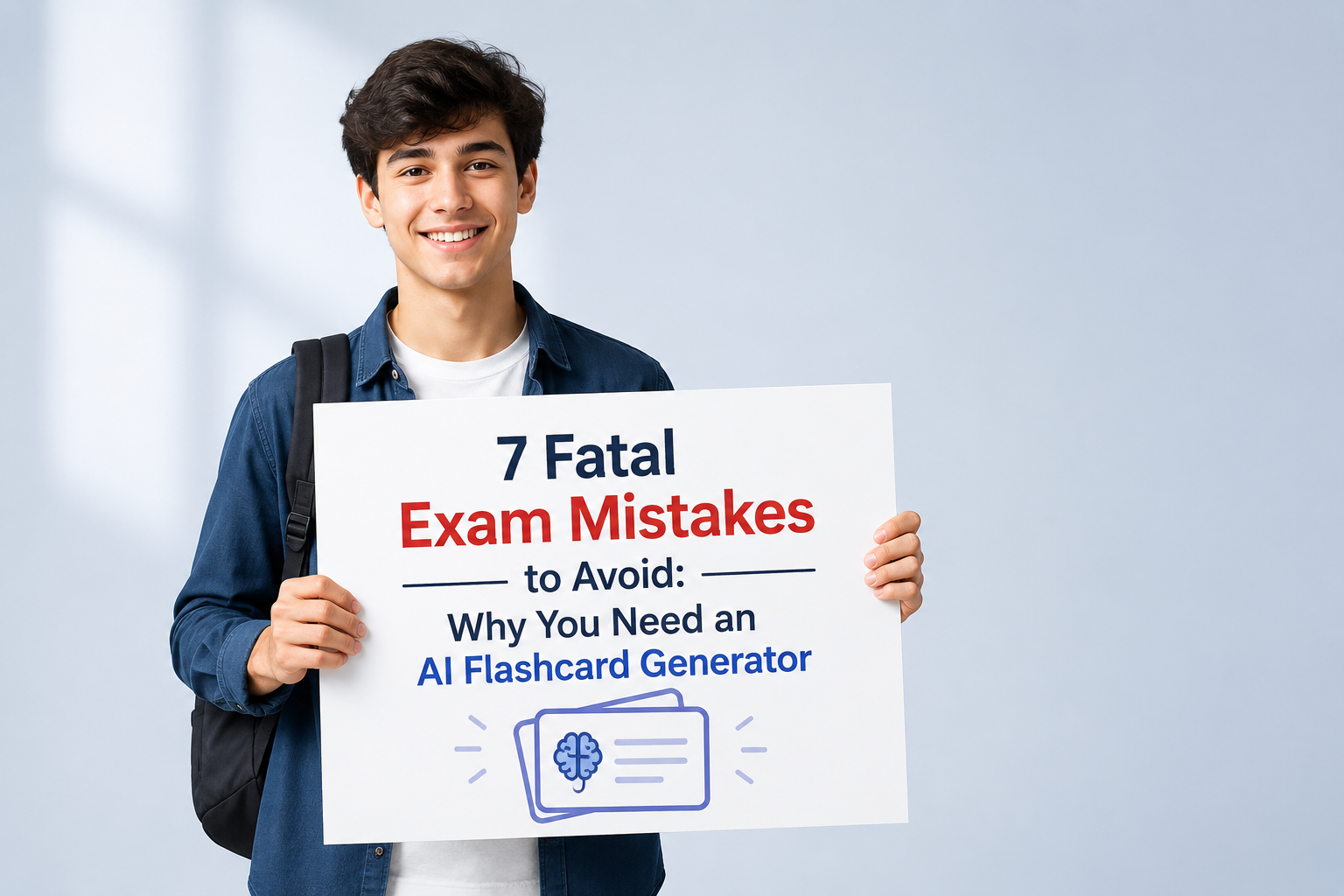

7 Fatal Exam Mistakes to Avoid: Why You Need an AI Flashcard Generator
Quick Summary
An AI flashcard generator is rapidly becoming the most essential study companion for college and high school students across the USA. By automatically converting your lecture notes, PDFs, and even audio recordings into interactive study decks, these tools eliminate hours of tedious manual prep. Combined with scientifically backed methods like spaced repetition and active recall, AI platforms like Anki, Quizlet, and newer AI-native apps help you retain information longer and study more efficiently. This guide breaks down exactly how to transition from traditional studying to an optimized, AI-powered exam preparation strategy, ensuring you spend less time formatting cards and more time mastering your syllabus.
Table of Contents
Introduction to the Future of Studying
-
Digital Flashcards and Learning Tools
-
The Science: Spaced Repetition and Active Recall Techniques
-
Choosing Your AI Flashcard Generator
-
Utilizing AI for Exam Preparation
-
Conclusion
-
FAQs
Introduction to the Future of Studying
As exams approach, American students are constantly looking for ways to maximize their study sessions. As illustrated in the CLUSTERS.PNG reference diagram you provided, the modern study ecosystem is deeply interconnected, linking smart software with cognitive science. At the center of this revolution is the AI flashcard generator—a tool designed to instantly transform your course materials into actionable quizzes.
Digital Flashcards and Learning Tools
Transitioning from paper to screen is the first step toward a more efficient semester.
Advantages of Digital Flashcards over Traditional Ones
While handwritten index cards have their charm, they are time-consuming to create and easily lost. Digital flashcards offer instant searchability, cloud backups, and the ability to integrate rich media like images and audio. More importantly, they can leverage algorithms to track your learning progress, ensuring you never waste time studying concepts you already know.
Exploring Various Learning Tools for Students
The modern student has access to an incredible suite of software. Beyond basic word processors, note-taking apps with bidirectional linking (like RemNote) and audio-transcription AI (like NoteHive AI) are changing how we capture information.
Top Digital Flashcard Apps for Students
When looking for the best digital platforms, options range from simple web interfaces to complex desktop software. The top choices integrate seamlessly with your existing notes, allowing you to focus purely on retention.
Combining Digital Flashcards with Other Study Techniques
For maximum effect, you shouldn’t rely on flashcards alone. By combining digital flashcards with other study techniques—such as the Pomodoro method for time management or the Feynman technique for deep comprehension—you create a holistic routine that tackles both memorization and conceptual understanding.
Spaced Repetition and Active Recall Techniques
To truly understand why an AI flashcard generator works, we have to look at the brain science behind memory.
Active Recall: Why It’s a Powerful Study Technique
Reading a textbook is passive; forcing your brain to retrieve an answer is active. Active recall: why it’s a powerful study technique comes down to building stronger neural pathways. Every time you struggle to remember a fact, you signal to your brain that this information is important. Research indicates that utilizing active recall through flashcards can enhance long-term retention by 50% or more.
The Science Behind Active Recall and Memory Retention
Studies show that testing yourself is far more effective than re-reading notes. The science behind active recall and memory retention proves that the effort of retrieving information halts the “forgetting curve,” anchoring facts deeply into your long-term memory.
Understanding Spaced Repetition and Its Benefits
If active recall is how you study, spaced repetition is when you study. Understanding spaced repetition and its benefits is crucial: it’s an algorithm that schedules your flashcards just as you are about to forget them. Difficult items return sooner, and familiar ones appear later.
Integrating Spaced Repetition into Your Study Routine
To start integrating spaced repetition into your study routine, you need consistency. Even 15 minutes a day using an automated schedule will yield better results than a 10-hour cram session before a final.
Apps and Tools for Practicing Spaced Repetition
Algorithms like FSRS and SM-2 are the modern gold standards. Knowing the right apps and tools for practicing spaced repetition ensures your study time is mathematically optimized for peak retention.
Choosing Your AI Flashcard Generator
With the foundational science covered, it’s time to pick your software.
AI Tools for Converting Notes into Flashcards
Modern AI tools for converting notes into flashcards act as your personal teaching assistant. By uploading a PDF, pasting text, or even using OCR on handwritten notes, AI can instantly extract key concepts and definitions, generating question-answer pairs and completely removing the friction of manual data entry.
Comparing AI Flashcard Generators: Anki, Quizlet, and More
When comparing AI flashcard generators: Anki, Quizlet, and more, you have to assess your specific needs:
-
Quizlet: Offers a massive library of pre-made decks and a user-friendly interface. Its newer AI feature, Magic Notes, is great for automatic creation, though often locked behind a premium subscription.
-
Anki: The undisputed standard for highly customizable spaced repetition, making it ideal for medical students and power users. It requires manual creation or third-party add-ons to act as a true AI generator.
-
Newer AI Natives: Tools like StudyGlen and NoteFren are built from the ground up to automate the flashcard process entirely, combining OCR, note-taking, AI generation, and built-in spaced repetition.
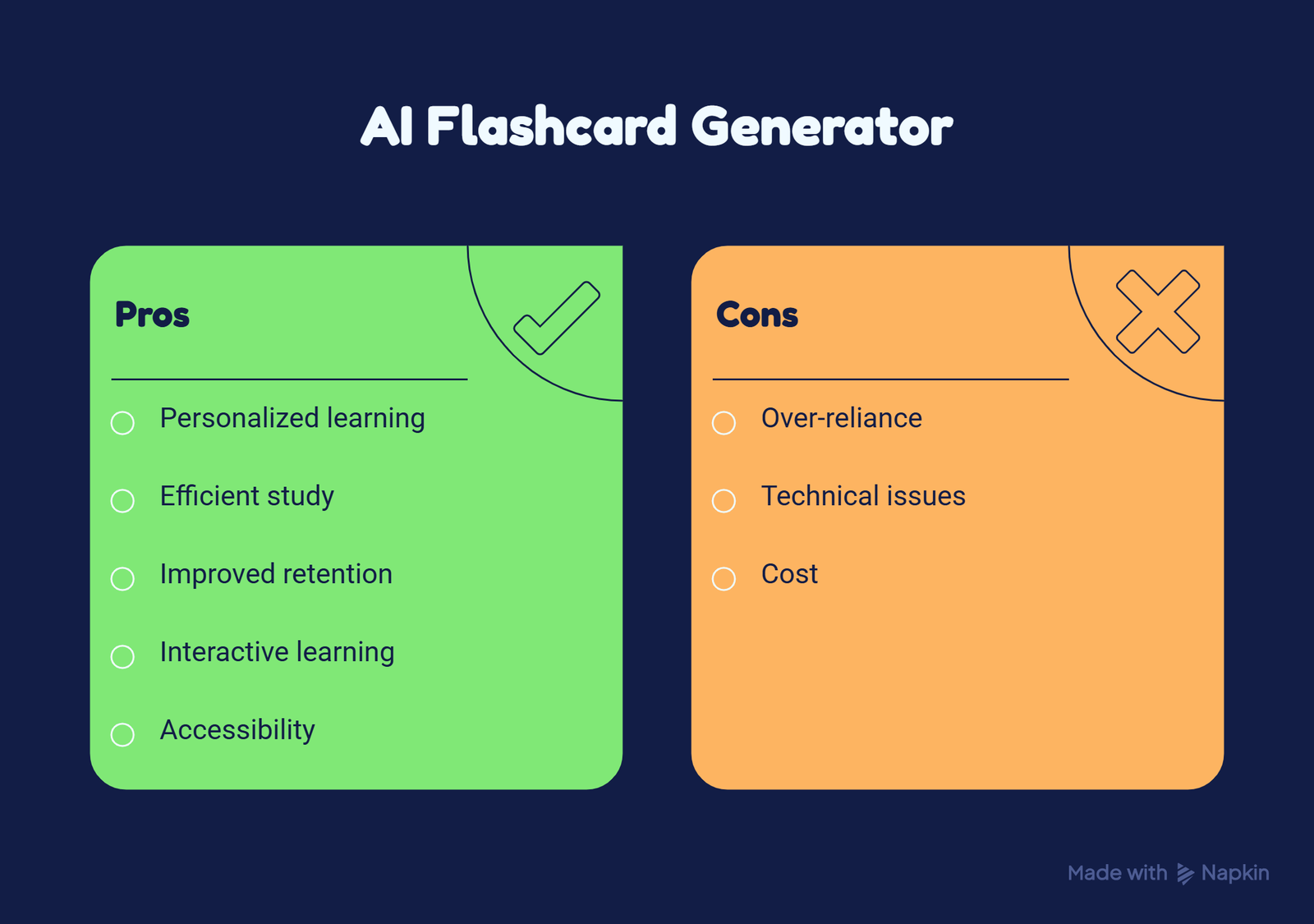
Free vs Paid AI Flashcard Generators: Which Is Right for You?
When deciding on free vs paid AI flashcard generators: which is right for you?, consider your budget and workload. Free tools like Anki are powerful but have a steeper learning curve. Paid AI subscriptions offer incredible speed and convenience—turning hours of card creation into a rapid automated task, which is invaluable during finals.
Utilizing AI for Exam Preparation
Getting ready for exams like the SAT, GRE, or college finals requires a personalized strategy.
The Role of AI in Personalized Exam Preparation
AI doesn’t just make generic cards; it adapts to your exact course materials. The role of AI in personalized exam preparation is to identify your weak spots and tailor the review session directly to your unique knowledge gaps, ensuring you don’t overlook critical concepts.
How to Create Personalized Decks with AI
Knowing how to create personalized decks with AI is simple: input high-quality source material. The better your initial lecture notes, PDFs, or textbook highlights, the more accurate and targeted your AI-generated questions will be.
Creating a Comprehensive Study Deck Using Digital Tools
Don’t just make flashcards for vocabulary. When creating a comprehensive study deck using digital tools, include conceptual questions, image occlusion (hiding parts of a diagram to test yourself), and diverse card types to test all angles of a subject.
Creating Exam-Specific Study Decks with AI
For specific classes or standardized tests, focus on creating exam-specific study decks with AI. By uploading your exact syllabus or lecture recordings, the AI generates practice materials that perfectly mimic your upcoming test environment.
How AI Can Enhance Your Study Sessions
Beyond simple card generation, AI can enhance your study sessions extends to deep comprehension. Some platforms, such as RemNote, offer AI explanation features that can clarify confusing concepts directly within the app, acting as an on-demand tutor.
AI-Powered Study Techniques for Faster Learning
By adopting these platforms, you unlock AI-powered study techniques for faster learning. You reduce the time spent on data entry and formatting and maximize the time spent on active cognitive retrieval.
Exam Preparation with AI: Tips and Tricks
To wrap up your strategy, here are a few final notes on exam preparation with AI: tips and tricks:
-
Always review AI-generated cards for accuracy before starting your study session to ensure they align with your professor’s focus.
-
Keep your flashcards atomic (one core idea per card).
-
Stick to your daily spaced repetition schedule; skipping days disrupts the algorithm.
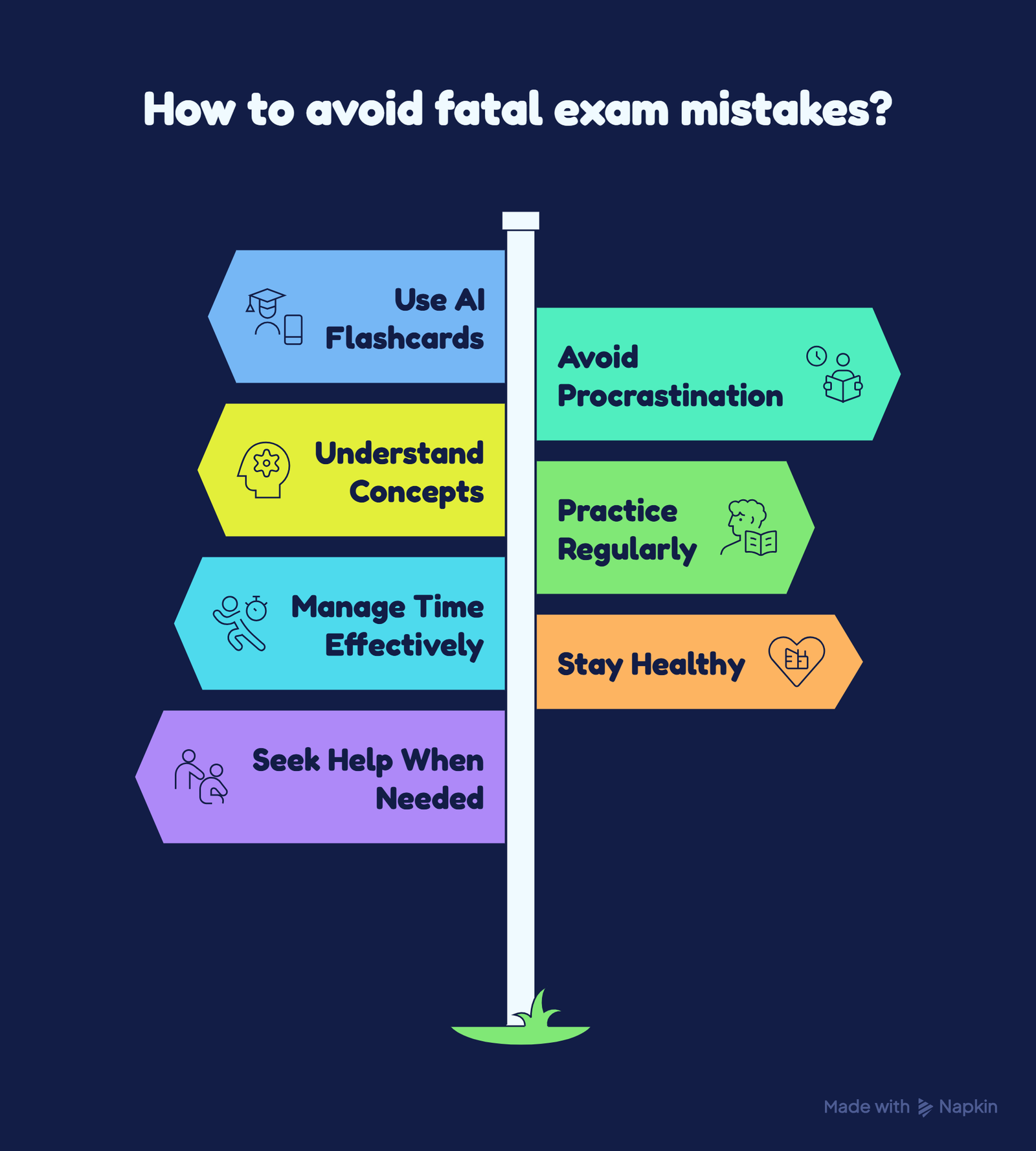
How-to-avoid-fatal-exam-mistakes
Conclusion
The era of writing out hundreds of index cards the night before a test is over. An AI flashcard generator bridges the gap between raw course material and long-term memory mastery. By embracing tools that automate the tedious aspects of studying and integrating proven techniques like active recall and spaced repetition, US students can drastically reduce their study hours while significantly improving their grades. Start exploring these digital tools today, and build a study routine that works smarter, not harder.
FAQs
1. What is an AI flashcard generator? It is a software tool that uses artificial intelligence to automatically scan your notes, PDFs, or audio files and generate question-and-answer flashcards, saving you hours of manual data entry.
2. Is Anki better than Quizlet for college students? It depends on your goals. Anki is highly customizable and uses superior spaced repetition algorithms, making it ideal for intensive memorization for power users. Quizlet is more user-friendly and offers a massive library of shared decks, though many AI generation features require a premium account.
3. Do AI flashcards really improve grades? Yes, provided they are used in conjunction with active recall and spaced repetition. The AI saves you time on preparation, allowing you to spend more energy actively testing your memory, which is scientifically proven to improve long-term retention.
4. Can I use these tools for specialized college exams? Absolutely. Many students create exam-specific study decks with AI by feeding the generator practice questions, textbook chapters, and official study guides to build highly targeted review sessions aligned with their class syllabus.
5. How do I make sure the AI doesn’t generate wrong answers? Always do a quick review of your deck before studying. While AI is incredibly advanced, it’s best practice to skim the generated cards to remove duplicates or unclear questions, ensuring the context and accuracy align perfectly with your coursework.